
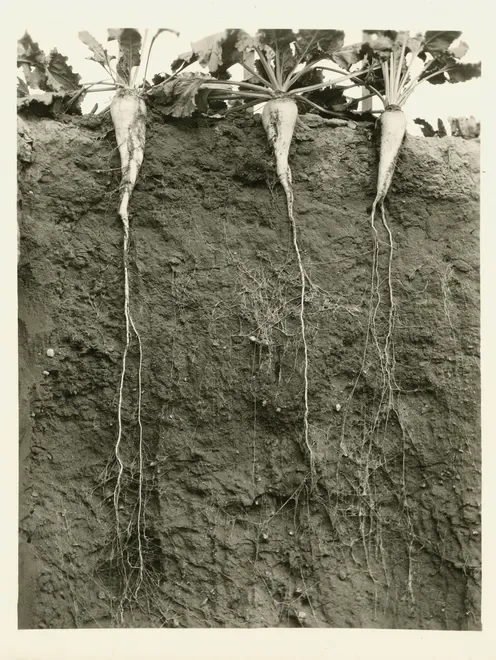
our historical ‘roots’
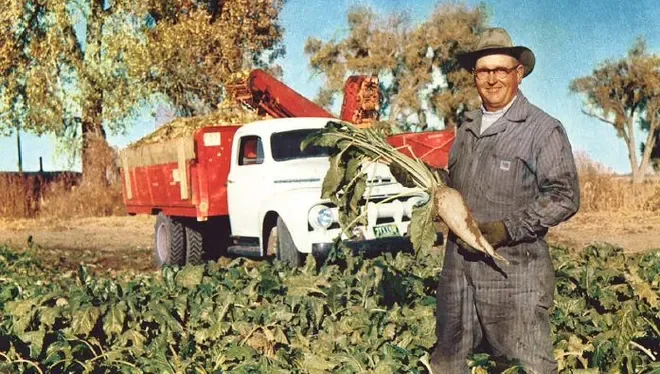
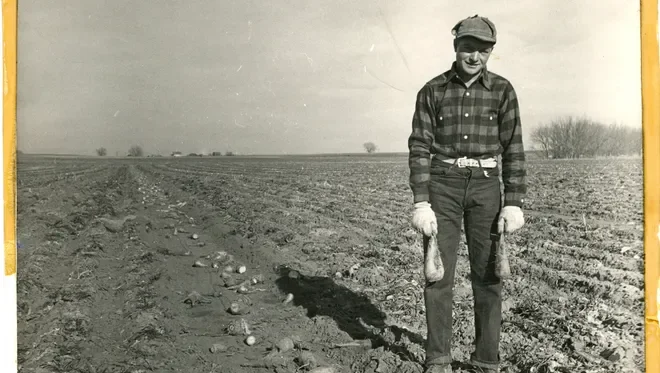
Sugar beet production was a cornerstone of Fort Collins’ economy from 1903 until the mid-1950s. Around the turn of the 20th century, sugar beets became an important crop in northern Colorado because the soil and climate produced roots with high sugar content. Scientists, at what is now Colorado State University, helped demonstrate they could be commercially grown in the region.
At the Sugar Beet Saloon, we celebrate this history and share the stories and images of this Colorado history.
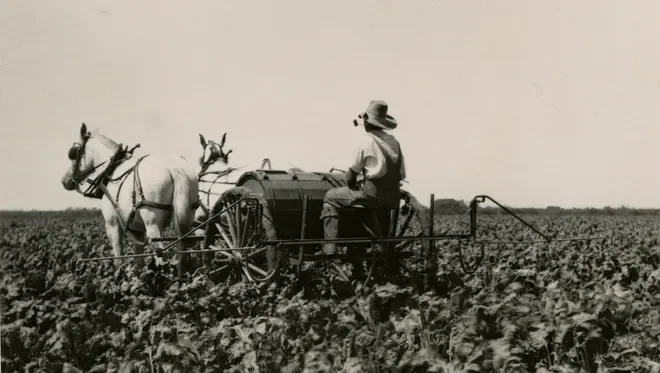
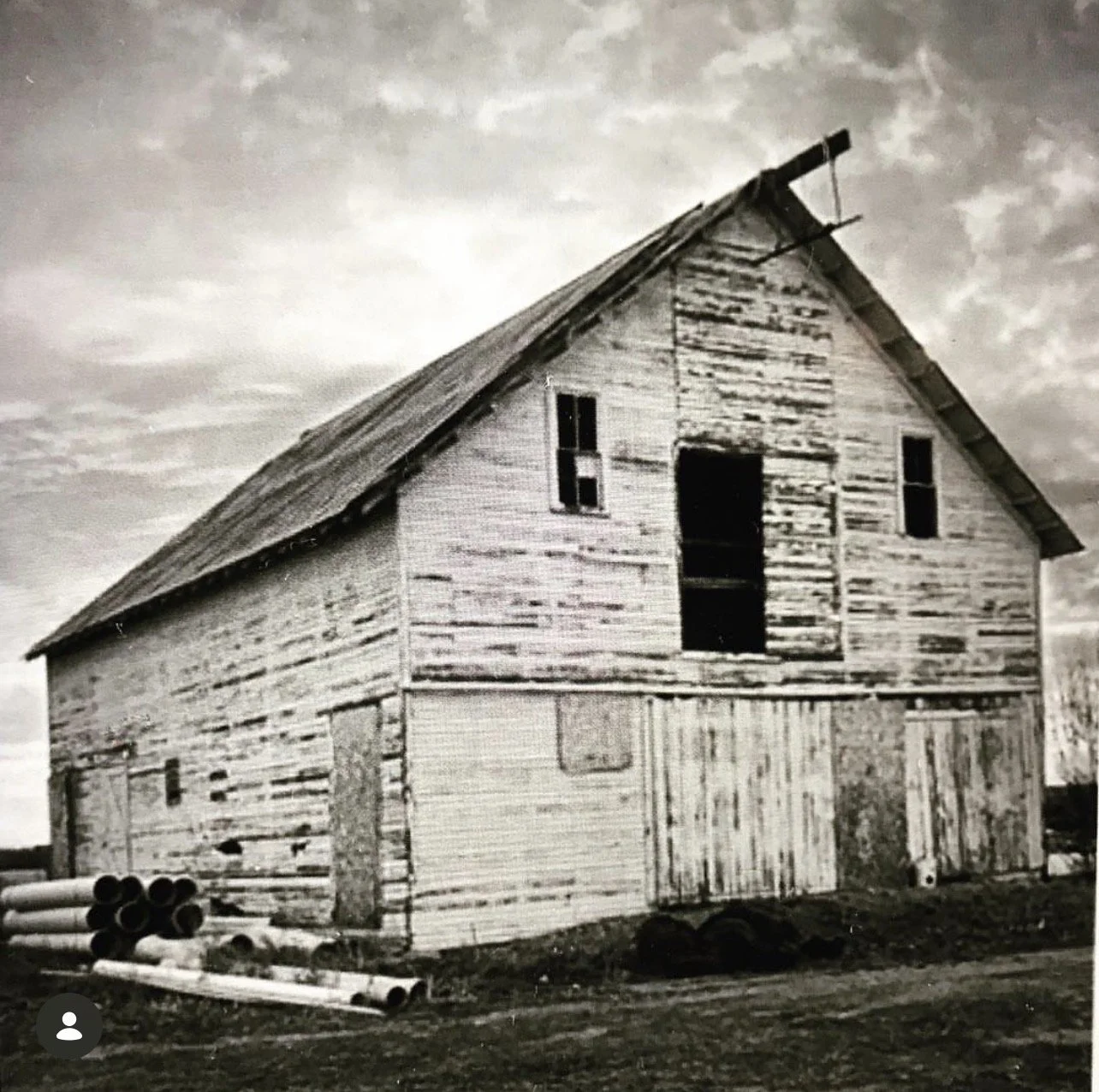

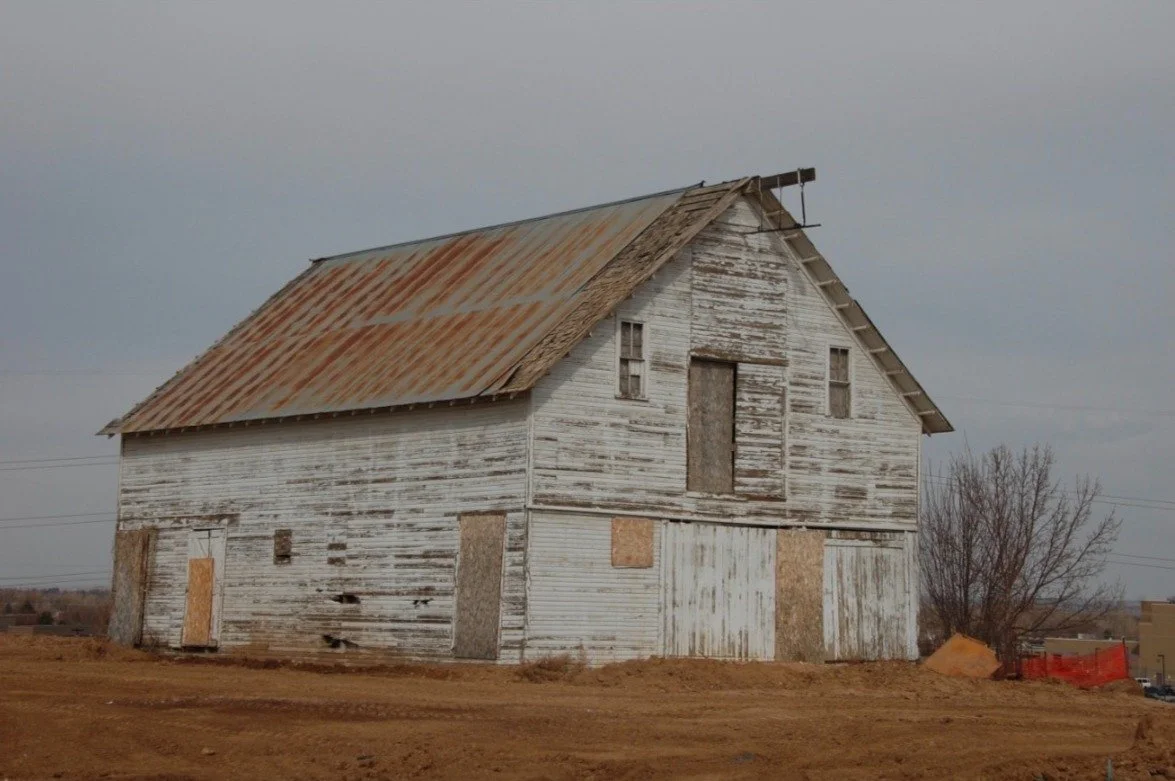

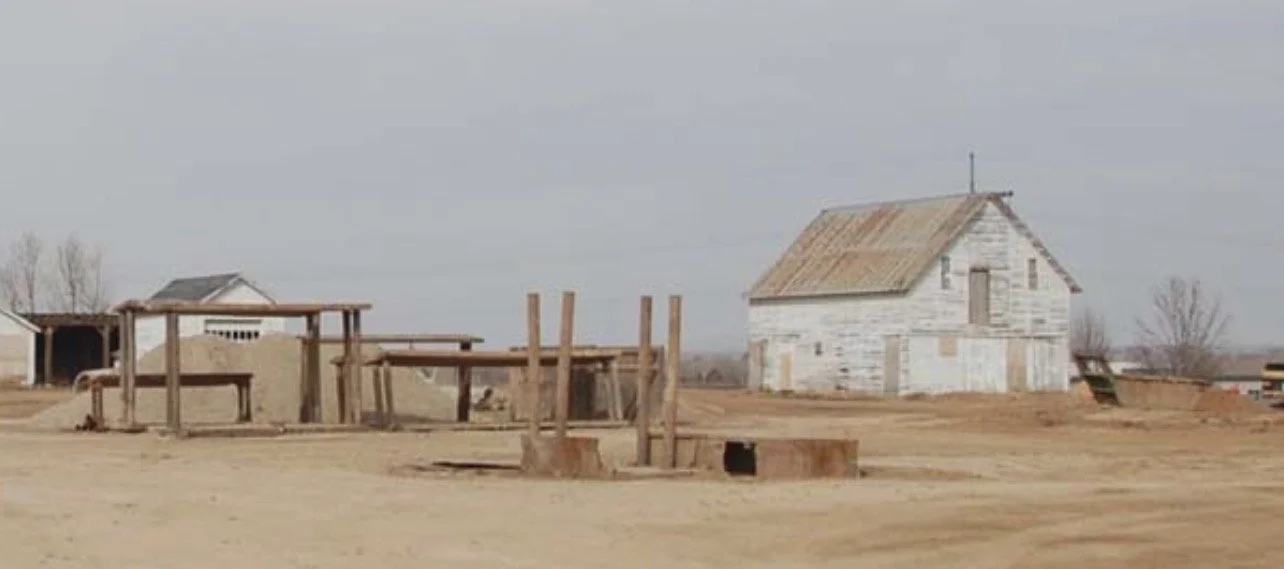
The history of this farm dates to the late 1910s when it was established by Henry and Edna Jessup. According to the property’s real estate appraisal card, the distinctive masonry farmhouse and gambrel-roofed barn were both built in 1919. By 1932, Henry and Edna Jessup were operating a well-established farm here. A Larimer County Assessor’s property appraisal for that year shows that the farm then included 70 acres of irrigable land, 10 acres of grazing land, and buildings valued at $4460.00. By 1942, Henry had passed away, but Edna Jessup continued to live here. In 1961, this farm was purchased by Calvin and Lois (Pennock) Johnson. Calvin and his brother, Glen Johnson, operated this farm and other agricultural holdings under the auspices of Spring Creek Farms Inc. which was initially established by Ed Johnson and his two sons.
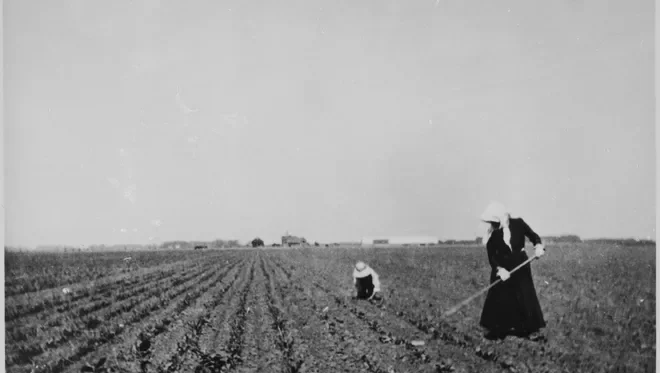
The Johnson family is also an important part of the local history. Edwin Johnson was born at Jaqua, Kansas on April 27, 1893, one of twelve children born to John Peter and Augusta (Olson) Johnson. In 1902, the Johnson family, including 9-year old Ed, moved west to Ault, Colorado. Here the family worked for a time thinning sugar beets before establishing their own farm along Fossil Creek, south of Fort Collins. Edwin married Cora Edwards of Timnath in November 1919. Farming in the area where Riffenburgh School and Edora Park are now located, they subsequently raised three children: Glen, Calvin, and Virginia. Ed and Cora eventually donated some of the land for Riffenburgh and for the park. Edora Park’s name, in fact, was derived from combining the names of Ed and Cora. Historically, Spring Creek Farm’s principal crops included sugar beets, corn, alfalfa, beans, and small grains.
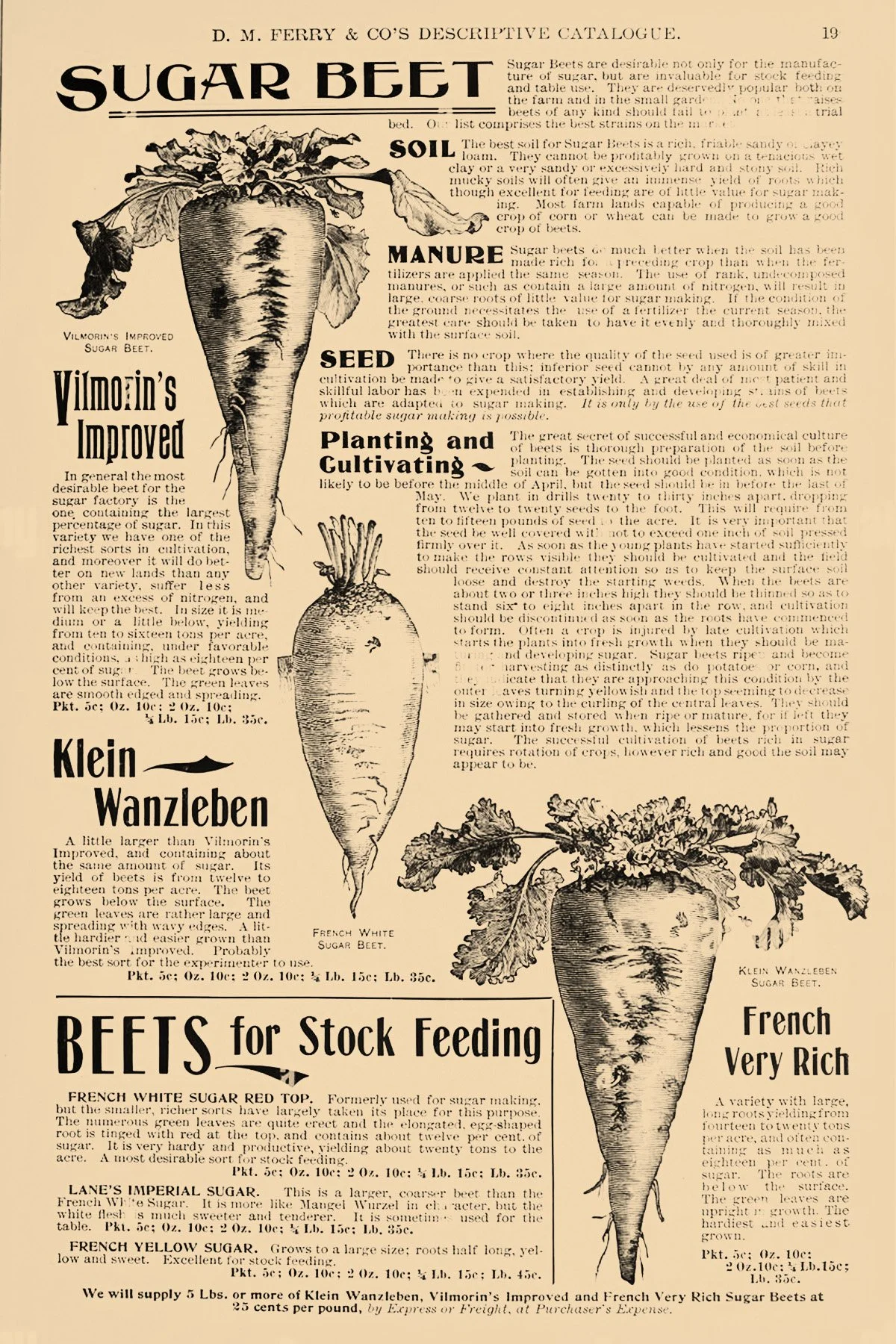
1921 seed catalog
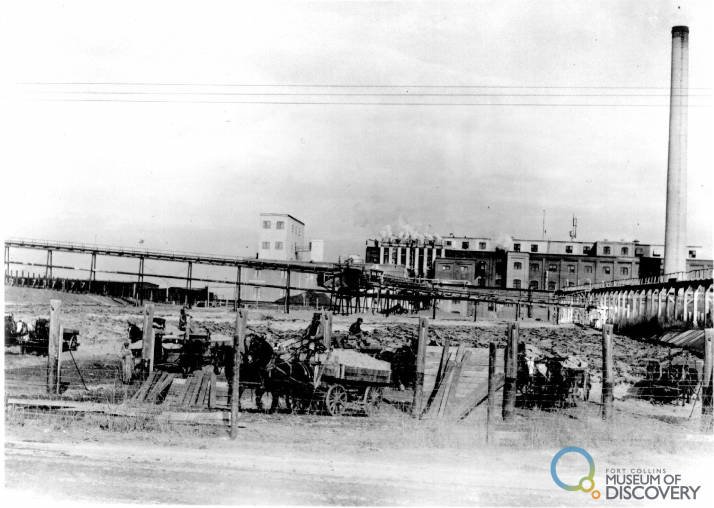
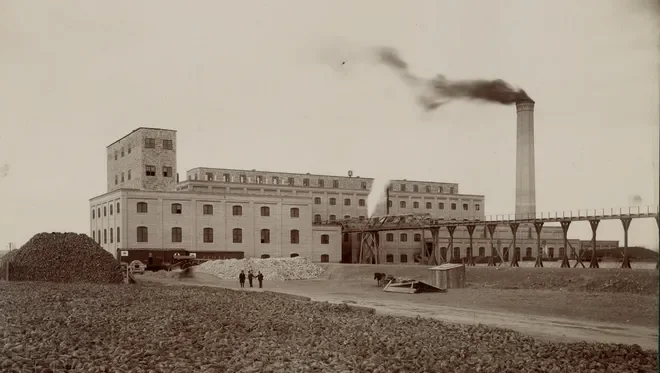
The Fort Collins sugar beet factory in 1906.
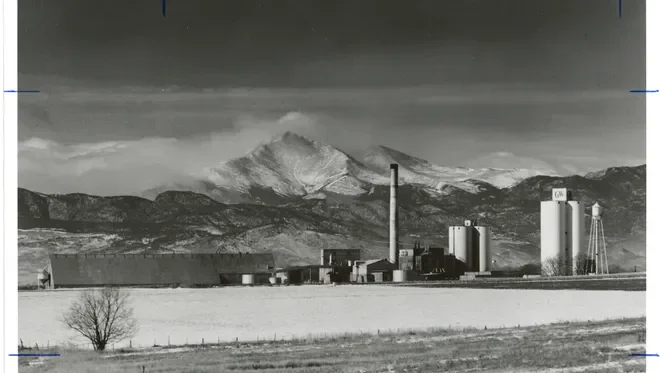
The former Longmont Sugar plant
In 1901, the newly-formed Great Western Sugar Company established a beet sugar plant in Loveland, the fourth in the state. The agricultural experiment station had proved that beets could be profitably grown in Larimer County, and the Loveland factory was quickly judged a success. In rapid succession, Eaton and Greeley also obtained factories. For Fort Collins business interests, it was "unthinkable" for their city not to share in the new industry. A group of prominent local businessmen took matters into their own hands and established a company to build a factory and process beets. The Fort Collins Sugar Manufacturing Company was formed by Benjamin F. Hottel, James Arthur, Peter Anderson, Joseph McClelland, Jesse Harris, Jacob Welch, and C.R. Welch. The group purchased the Alexander Barry farm and a large parcel of land owned by Boulder banker Charles Buckingham for their factory site. J.F. Kilby was contractor for the factory which was erected in 1902-1903. The factory processed its first beets in January 1904. The Great Western Sugar Company purchased the Loveland and Fort Collins factories in the summer of 1904.
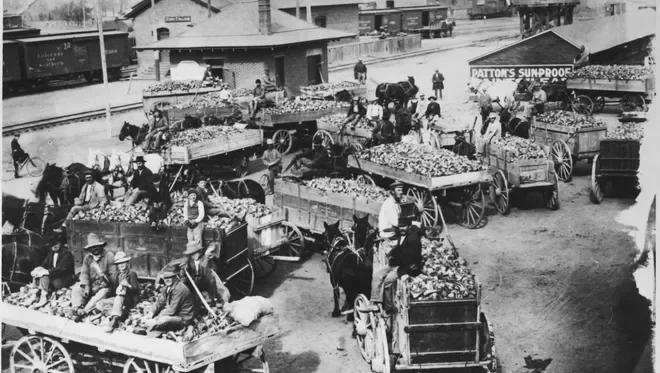
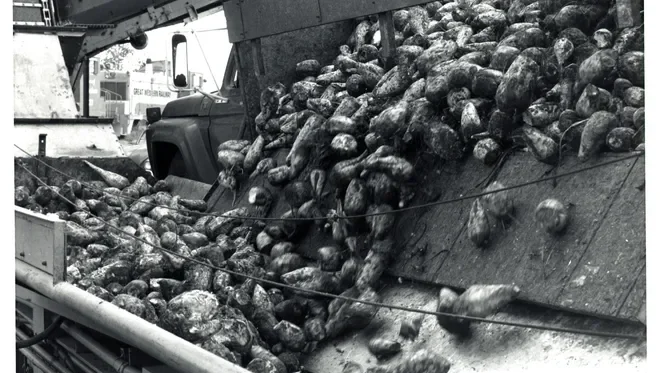
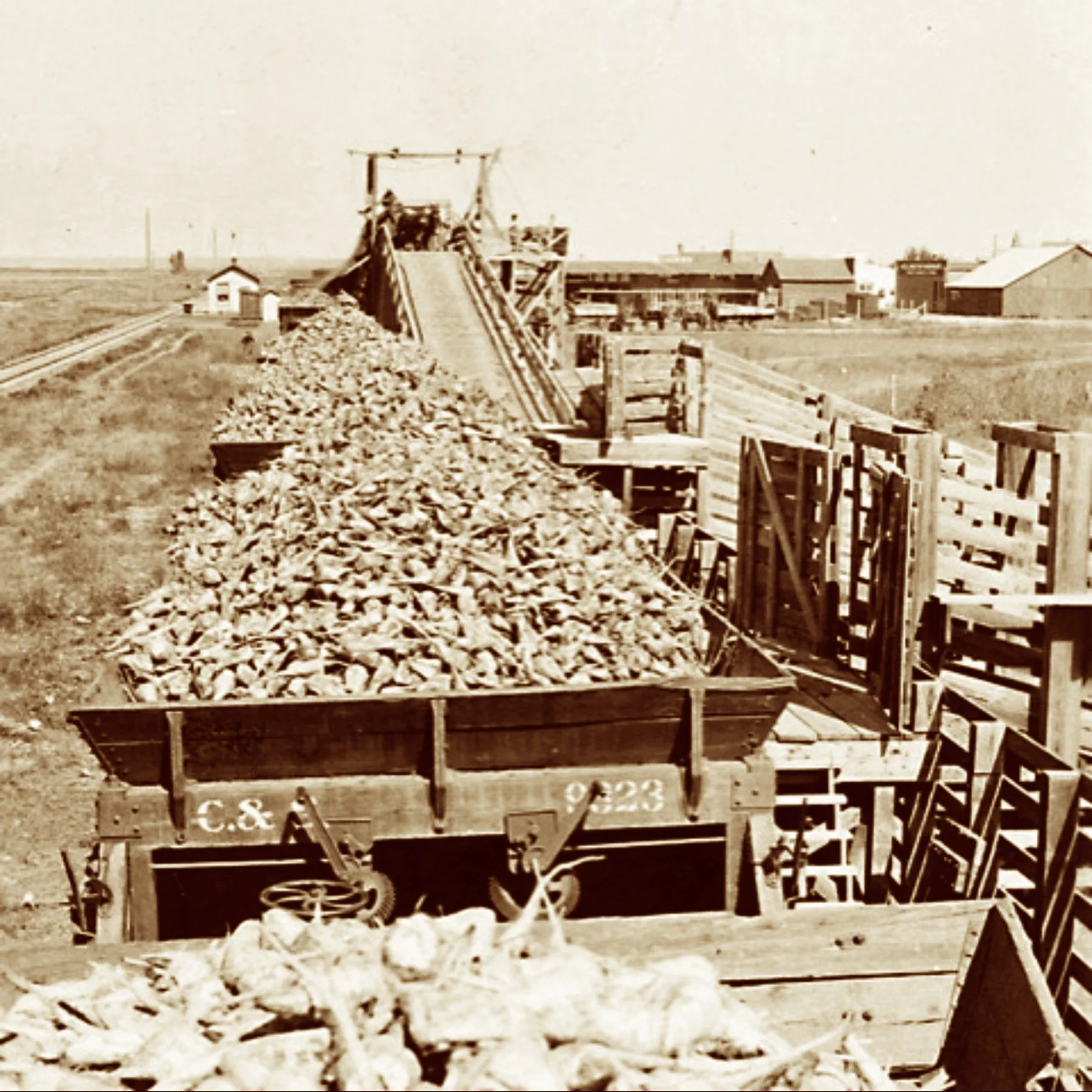
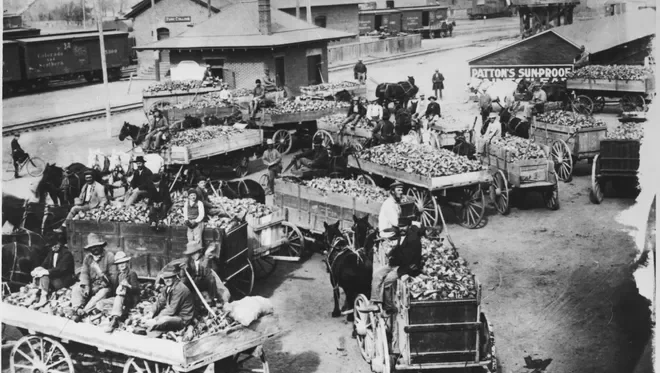
Farmers drop off sugar beet crops at a Fort Collins depot in 1910.
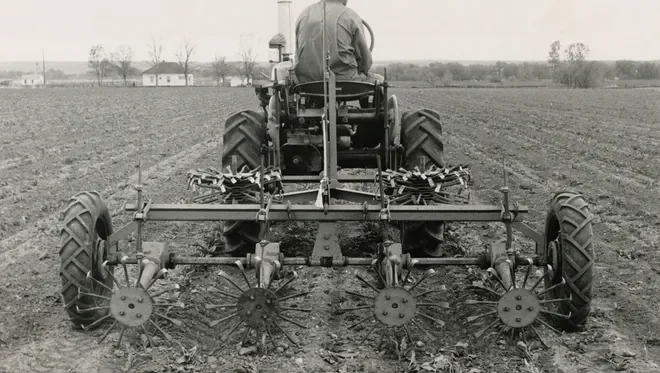
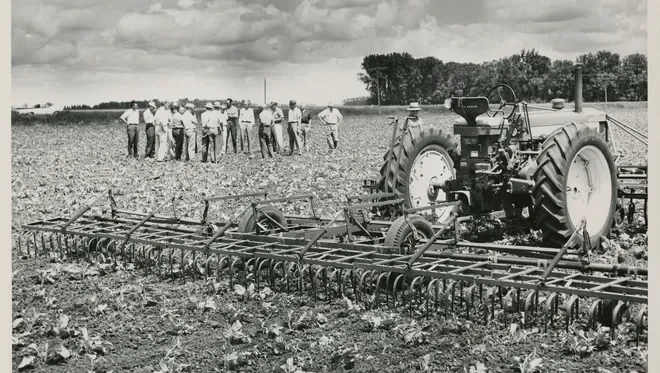
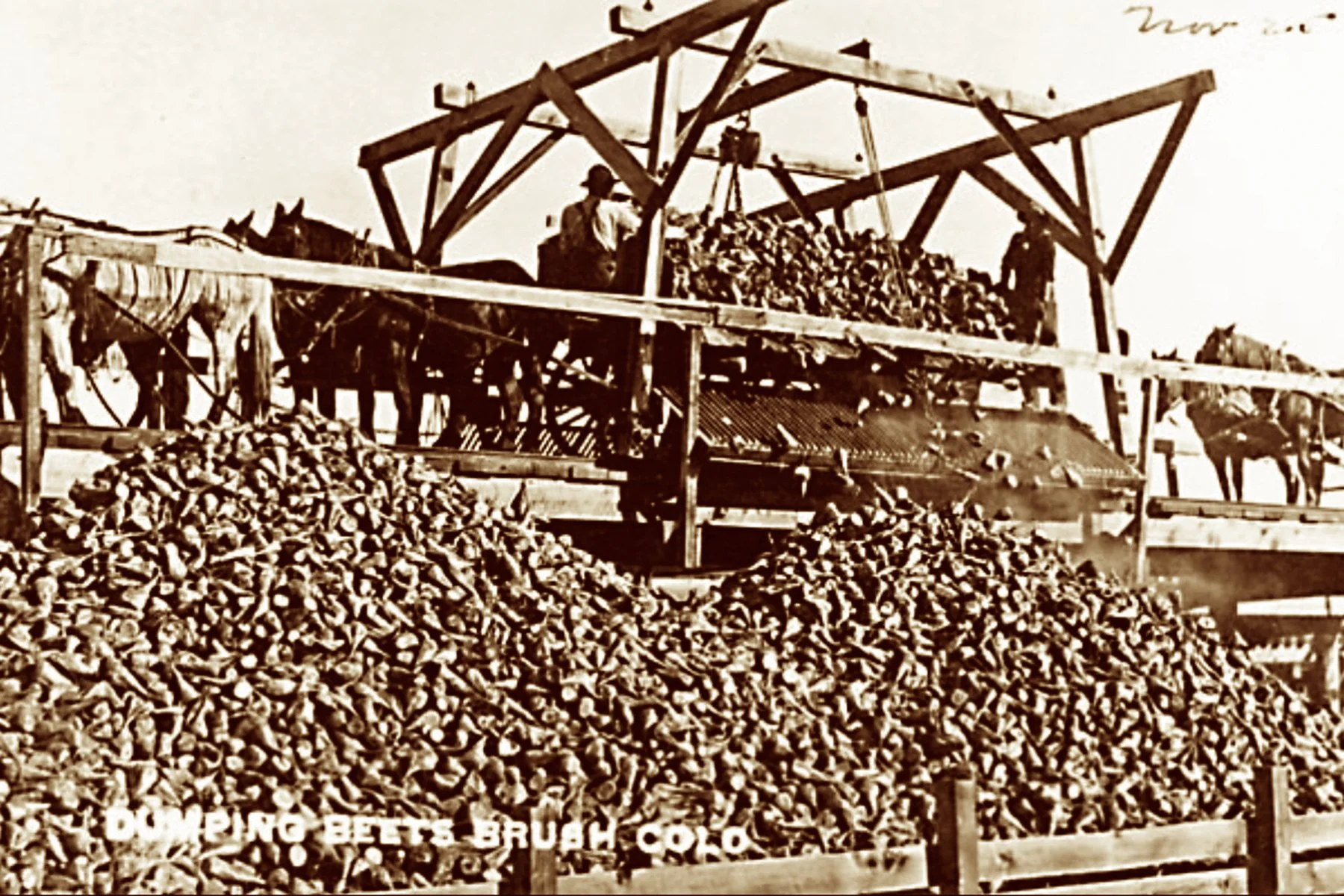
Sugar beet harvest
The impact of the sugar factory on Fort Collins was so substantial that historian Evadene Swanson judged that much of Fort Collins' "prosperity for the next forty years revolved around the cultivation of beets and the feeding of lambs. Local business hinged on the program." Area farmers had pledged to put a minimum of five thousand acres in sugar beets as an incentive for constructing a factory. Fields north of town near the factory and in the southwestern portion of town were used for beet cultivation. While the first processing season of the factory yielded just over 79,000 bags of sugar, by 1927, 927,475 bags were produced.
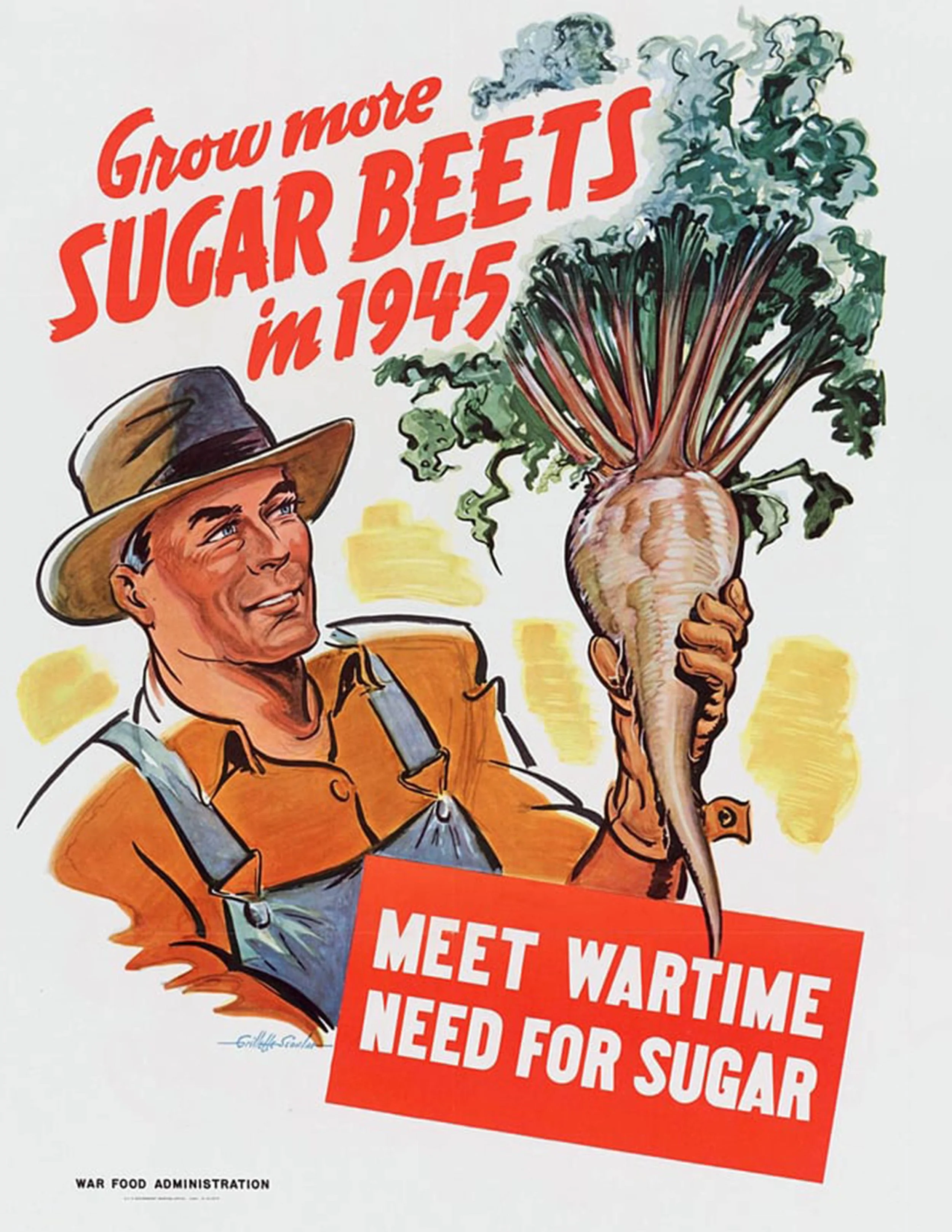
WWII poster encouraging farmers to increase sugar beet supply.
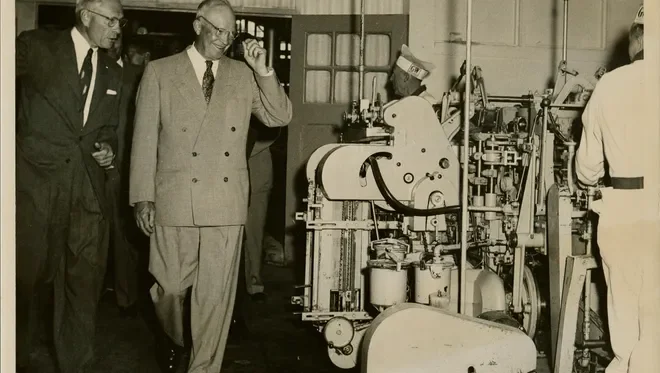
President Dwight Eisenhower visits a sugar beet factory in Brighton in 1954.
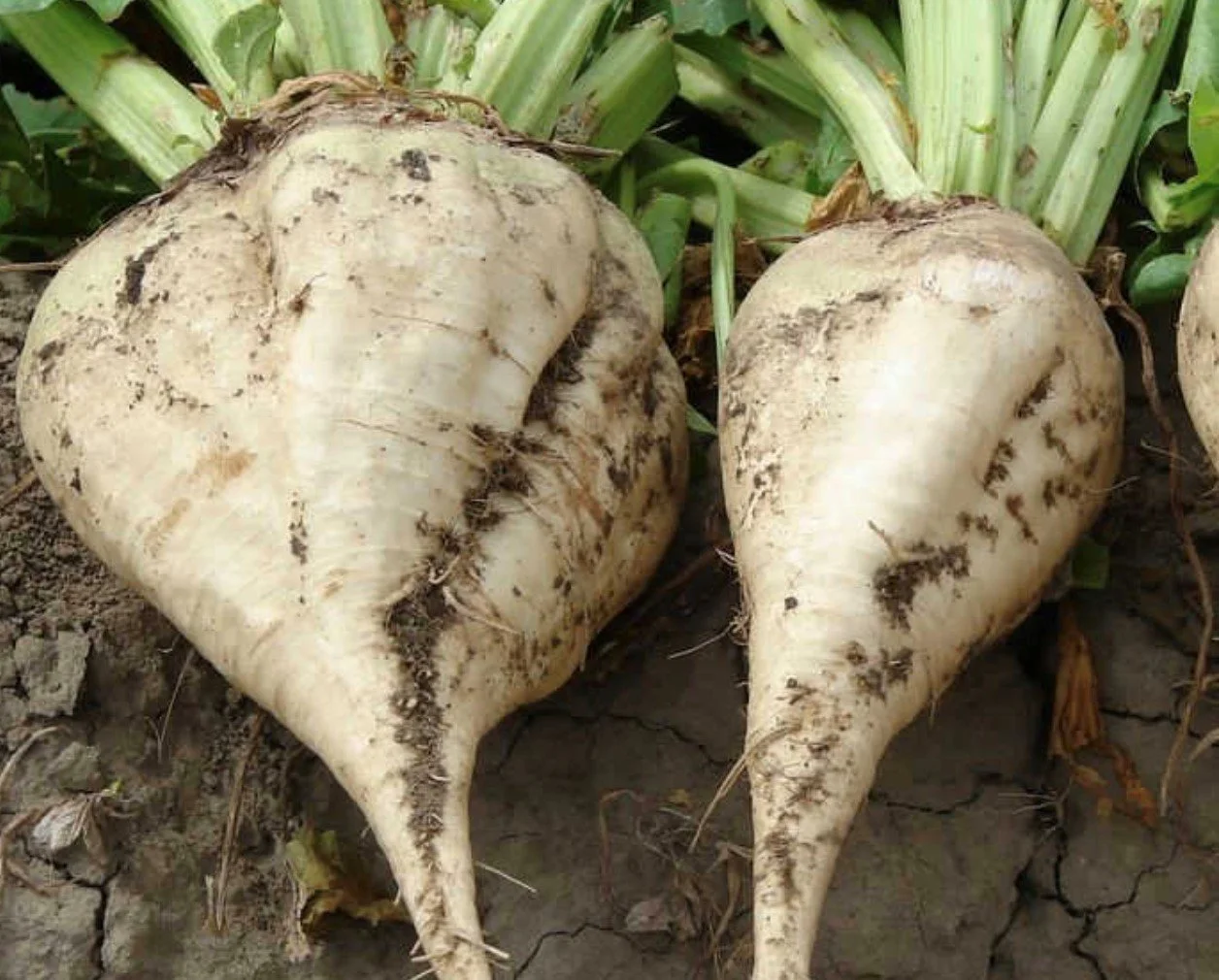
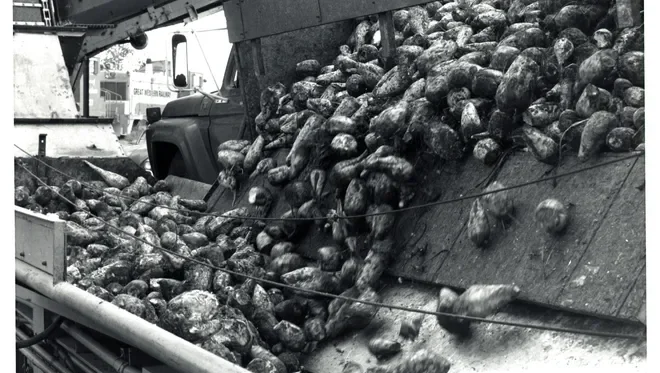
Sugar beets